Totinova designs and executes plant genetic transformation, genome editing, and tissue culture protocols for universities and biotechnology companies — turning research questions into regenerated, reproducible plants.
Nine core services organized around how research teams actually work with us — in the lab, on a project, or in a training room.
Both crops carry centuries of cultivation history and, in the lab, real regeneration challenges. Two examples of where our protocols are put to work.
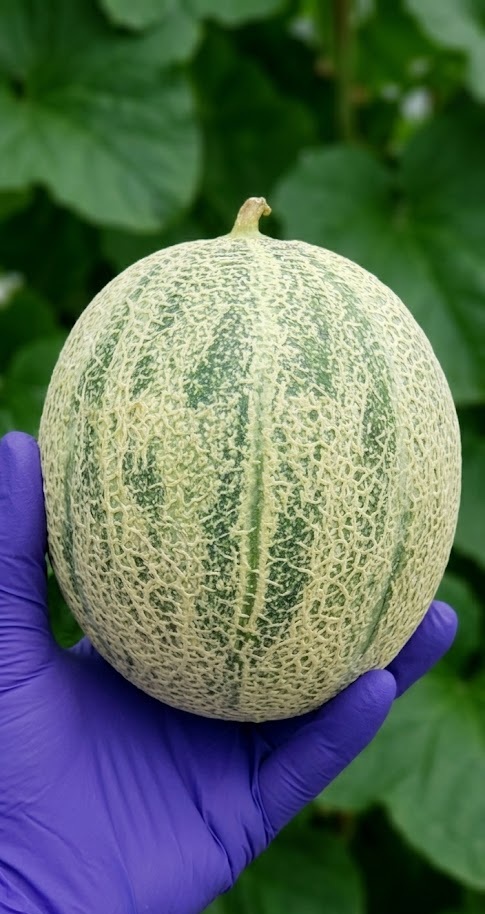
Domesticated in Africa and Asia thousands of years ago and long prized across the Mediterranean and Middle East, melon remains genetically diverse and notoriously difficult to regenerate in vitro. We work on transformation and micropropagation protocols tuned to this variability, cultivar by cultivar.
Brought from the Americas and transformed into a cornerstone of global agriculture, tomato is also the model species for plant genome editing. We use it for CRISPR/Cas construct validation, regeneration benchmarking, and applied trait research for partner programs.
The stages behind our published melon transformation protocol — the same process we bring to your species.
Explants are transformed and grown under selection to identify successfully modified tissue versus untreated controls.
Selected material is multiplied and rooted under controlled in vitro conditions.
Where needed, hand-pollination on greenhouse plants supports controlled crosses and seed production.
Regenerated plants are transferred to soil and grown on to confirm a stable, characterized result.
Shirazi Parsa, H. et al. (2023). CRISPR/Cas9-Mediated Cytosine Base Editing Using an Improved Transformation Procedure in Melon (Cucumis melo L.). International Journal of Molecular Sciences, 24(13), 11189.
doi.org/10.3390/ijms241311189 →A consistent process whether you're a university lab or an industry R&D team.
A call to understand your species, existing protocols, timeline, and what success looks like.
A written plan covering methodology, milestones, and expected outcomes before any work starts.
Transformation, editing, culture, or regeneration, with regular progress updates along the way.
Characterized plants, data, and documentation ready to publish, patent, or scale internally.
Totinova works at the intersection of genetic transformation, genome editing, and tissue culture, helping academic and industry teams move from a research question to a regenerated, characterized plant.
We take on the protocols that don't work off the shelf — recalcitrant species, low-efficiency regeneration, editing constructs that need tuning — and build the customized process your species and your timeline require.
Every engagement is built on scientific rigor, transparent methodology, and long-term reliability, for partners who need results they can publish, patent, or scale.
Shirazi Parsa, H., Sabet, M.S., Moieni, A., Shojaeiyan, A., Dogimont, C., Boualem, A., Bendahmane, A. (2023). CRISPR/Cas9-Mediated Cytosine Base Editing Using an Improved Transformation Procedure in Melon (Cucumis melo L.). International Journal of Molecular Sciences, 24(13), 11189.
doi.org/10.3390/ijms241311189 →No generic pipelines — transformation and regeneration protocols are optimized for the plant in front of us, including recalcitrant and under-studied species.
Every project is designed with the same rigor expected of a peer-reviewed study, from construct design through data interpretation.
Universities, institutes, and companies work with us across multiple projects because timelines and results hold up.
Our work supports crop resilience and sustainable agriculture — research with consequences beyond the lab bench.
Hadi holds a PhD in Plant Molecular and Cellular Biology from Université Paris-Saclay and completed over four years of postdoctoral research at the Institute of Plant Sciences Paris-Saclay (IPS2). His expertise includes plant tissue culture, regeneration, genetic transformation, and CRISPR/Cas9 genome editing, with extensive experience in tomato and melon.
Totinova was founded to bring this expertise directly to research laboratories and biotechnology companies, with the founder personally involved in every project.
Most crop and model species, including recalcitrant ones. If a published protocol doesn't exist for your species, that's exactly the kind of project we take on.
Usually yes — seeds, explants, or tissue, depending on the species and protocol. We'll confirm exact requirements and any import/phytosanitary steps during the proposal stage.
It depends on the species and whether an existing protocol needs adapting or a new one needs developing — anywhere from a few weeks for optimization work to several months for a full transformation-to-regeneration pipeline on a recalcitrant species.
Yes. We work under NDA by default for industry partners, and agree on data and IP ownership terms with universities before any project begins.
Yes — our training and workshop services are built for exactly that, either alongside a project or as a standalone engagement in your own lab.
Whether it's a single custom protocol or an ongoing research partnership, tell us what you're working on.